
Fetal DNA Test What Is It: Prenatal health check-ups are critically important for both the mother and the baby. One of the most important of these check-ups is the prenatal genetic test known as the fetal DNA test. The fetal DNA test provides valuable information about the baby’s health and helps with the early diagnosis of possible problems. In this article, we will present comprehensive information about the fetal DNA test.
📞 For Information and Appointments: +90 212 287 57 75
💬 WhatsApp: +90 542 386 52 34
What is the Fetal DNA Test?
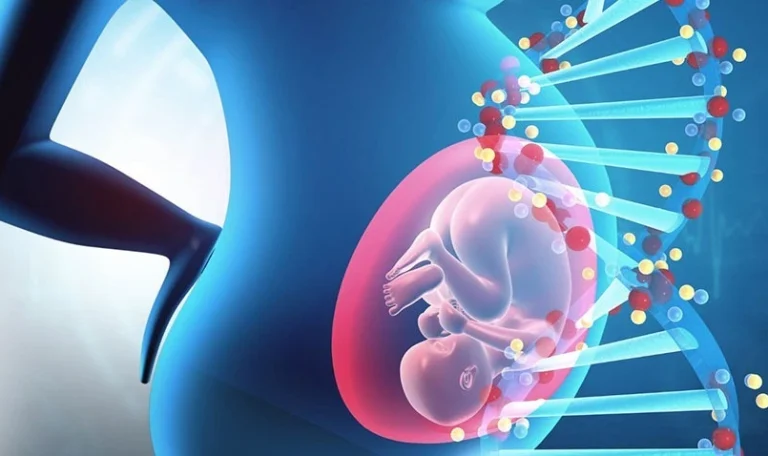
Fetal DNA test is a non-invasive test in which the baby’s genetic characteristics are analyzed using samples taken from the mother’s blood. This test helps detect possible genetic disorders or chromosomal anomalies in the baby’s DNA. The fetal DNA test does not require any intervention from the womb during the pregnancy process and is applied safely. This test is also known as the noninvasive prenatal test (NIPT) or cfDNA test.
Why is the Fetal DNA Test performed?
The fetal DNA test may be performed for various reasons:
- Detection of Chromosomal Anomalies: The fetal DNA test helps with the early diagnosis of common chromosomal abnormalities such as Down syndrome, trisomy 18 (Edwards syndrome), trisomy 13 (Patau syndrome), or trisomy 21.
- Evaluation of Genetic Diseases: By examining the baby’s genetic profile, the presence of hereditary diseases seen in the family is investigated. This genetic screening is important for making a risk assessment.
- Gender Determination: The fetal DNA test allows you to determine the baby’s gender at an early stage.
- Evaluation of Other Risky Conditions: In cases such as the expectant mother being of advanced age or having a family history of genetic disease, performing a fetal DNA test is recommended.
How is the Fetal DNA Test performed?
The fetal DNA test is performed with a blood sample taken from the mother’s arm. This blood sample contains cells that include the baby’s DNA. These cells are also known as cell-free fetal DNA (cfDNA). In the laboratory, the DNA obtained from these cells is analyzed. Thus, the baby’s genetic profile can be examined.
When is the Fetal DNA Test performed?
The fetal DNA test can be performed starting from the 10th week of pregnancy. However, the most appropriate time period is generally between weeks 10–22. The test performed during this period provides the most accurate results.
How long does it take to get Fetal DNA Test results?
Fetal DNA test results are usually obtained within 1–2 weeks. However, in some special cases, receiving the results may take a little longer. Results are reported as positive or negative and evaluated as low risk or high risk.
Advantages of the Fetal DNA Test
The fetal DNA test offers many advantages:
- Safe and Comfortable: Since it does not require any intervention from the womb, the test is extremely safe and comfortable to perform.
- Early Diagnosis: Because it can be performed in the early stages of pregnancy, possible problems can be detected quickly.
- High Accuracy: The fetal DNA test can determine chromosomal anomalies and genetic diseases with high accuracy.
- Gender Determination: It allows you to learn the baby’s gender at an early stage.
Risks of the Fetal DNA Test
There are no risks during the application of the fetal DNA test. Apart from minimal pain or bruising that may occur during blood sample collection, there is no risk for the mother or the baby.
Information Provided by the Fetal DNA Test
The fetal DNA test provides valuable information on the following:
- Chromosomal anomalies (Down Syndrome, Edwards Syndrome, Patau Syndrome, etc.)
- Single-gene diseases (Sickle Cell Anemia, Duchenne Muscular Dystrophy, etc.)
- The baby’s gender
Cost of the Fetal DNA Test
The cost of the fetal DNA test may vary from country to country and according to healthcare institutions. However, it is generally more expensive compared to traditional screening tests. Nevertheless, considering the advantages it provides, the cost of the fetal DNA test is at a reasonable level.
Importance of the Fetal DNA Test
The fetal DNA test plays a critical role in prenatal health screening. Thanks to this test, information about the baby’s health can be obtained at an early stage and possible problems can be detected in time. Thus, it becomes possible to take the necessary precautions and determine appropriate treatment methods. The fetal DNA test is of great importance for protecting the health of both the mother and the baby.
Alternatives to the Fetal DNA Test
Other methods used in prenatal health screening besides the fetal DNA test are as follows:
- Ultrasound: An examination used to visualize the baby’s development and anatomical structure.
- Amniocentesis: The baby’s chromosomal structure is examined with a fluid sample taken from the mother’s abdomen.
- Chorionic Villus Sampling (CVS): Genetic analysis is performed with a cell sample taken from the placenta.
However, the fetal DNA test is preferred more compared to other methods because it is safe, comfortable, and has a high accuracy rate.
Healthcare institutions performing the Fetal DNA Test
Many private and public healthcare institutions in our country provide fetal DNA test services. This test can be performed in university hospitals, private medical centers, and private laboratories. Fetal DNA test Ankara, Istanbul, Izmir is widely performed in major cities such as. For those wondering Is the fetal DNA test performed in Turkey, yes, this test is applied in many healthcare institutions. By consulting your doctor, you can identify hospitals performing fetal DNA tests and choose the most suitable healthcare institution. The fetal DNA test is one of the most important components of prenatal health screening. This test provides valuable information about the health of the mother and baby and helps with the early diagnosis of possible problems. Being safe, comfortable, and having a high accuracy rate, the fetal DNA test has a critical role during the pregnancy process. Expectant mothers who are considering having a DNA test during pregnancy are recommended to receive genetic counseling and consult their doctors. Thus, they can obtain detailed information about what is examined in the fetal DNA test, as well as the advantages and risks of the test.